
Medical Test for Police Recruitment 2026: HIV and Mental Health Results Check-Up
The physical and credential screening stage for the 2026 Police Constable Recruitment exercise has concluded across the 36 states of Nigeria and the Federal Capital Territory (FCT), bringing thousands of applicants one step closer to joining the Nigeria Police Force. For candidates who successfully passed the screening process, the next major hurdle is the police medical examination.
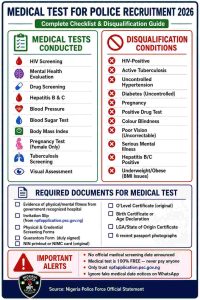
The medical screening exercise is designed to assess whether candidates are physically, mentally, and medically fit for police service. During this stage, applicants may undergo various health assessments, including HIV screening, mental health and psychological evaluation, drug testing, hepatitis screening, blood pressure checks, body mass index (BMI) assessment, tuberculosis testing, pregnancy testing for female candidates, and visual examinations.
In this comprehensive guide, you’ll learn everything you need to know about the Police Medical Test 2026, including the tests conducted, required documents, preparation tips, common reasons for disqualification, and how to avoid recruitment scams. Bookmark this page and check back regularly for official updates regarding medical screening schedules and procedures.
Quick Summary: Police Medical Test 2026
| Category | Details |
|---|---|
| Medical Tests Conducted | HIV Screening, Mental Health/Psychological Evaluation, Drug Screening, Hepatitis B & C, Blood Pressure Check, Blood Sugar Test, Body Mass Index (BMI), Tuberculosis Screening, Visual Assessment, Pregnancy Test (Female Candidates) |
| Purpose of Screening | To determine whether candidates are physically, mentally, and medically fit for police service |
| Who Must Participate? | Candidates who successfully passed the physical and credential screening stages |
| Current Recruitment Status | Physical and credential screening completed in most states |
| Medical Screening Date | Not yet officially announced by the Nigeria Police Force or Police Service Commission |
| Required Documents | Medical fitness evidence, screening forms, identification documents, certificates, and other recruitment documents |
| Warning | Ignore unofficial messages claiming medical screening dates have been released |
Important Notice
As of the latest available information, no official medical screening date has been announced for the 2026 Police Constable Recruitment exercise. Candidates are strongly advised to rely only on official communication channels and avoid individuals requesting payment or promising assistance with medical screening results.
Continue monitoring official recruitment portals and police announcements for verified updates regarding medical examination schedules and requirements.
What is the Police Medical Test?
The Police Medical Test is a compulsory stage of the Nigeria Police Force recruitment process for candidates who successfully pass the physical and credential screening exercise. The purpose of the medical examination is to assess whether applicants are physically, mentally, and medically fit to undergo police training and perform the demanding duties associated with law enforcement.
Police officers are often required to work under pressure, respond to emergencies, maintain public order, and carry out physically demanding assignments. As a result, recruitment authorities conduct comprehensive medical assessments to ensure candidates meet the required health standards.
Purpose of the Medical Test
The medical screening is designed to:
- Verify that candidates are physically capable of performing police duties.
- Assess psychological and emotional fitness for high-stress situations.
- Detect underlying health conditions that may affect performance.
- Identify communicable diseases that could pose health risks.
- Evaluate visual, physical, and mental readiness for service.
- Confirm compliance with recruitment medical standards.
According to the Nigeria Police Force, the examination covers visual assessment, general medical tests, and psychological evaluation. Areas assessed may include eyesight, blood pressure, blood sugar, body mass index (BMI), hepatitis screening, HIV screening, tuberculosis testing, pregnancy testing for female candidates, personality assessment, integrity evaluation, and drug screening.
The medical test plays a critical role in ensuring that only candidates who meet the required health and fitness standards proceed to the final stages of the recruitment process.
6.1 HIV Screening
One of the most discussed aspects of the police medical examination is HIV screening. As part of the general medical assessment, candidates may be required to undergo blood tests that help medical professionals evaluate their overall health status and determine their fitness for service.
What is Tested?
The HIV screening test is designed to detect the presence of Human Immunodeficiency Virus (HIV) antibodies or other indicators of HIV infection in a candidate’s blood sample.
Why is the Test Conducted?
The purpose of HIV screening is to assist the medical board in assessing a candidate’s health status in accordance with the medical standards and recruitment guidelines applicable to the Nigeria Police Force recruitment exercise.
How is the Test Performed?
Candidates are typically required to provide a blood sample at a government-recognised medical facility or designated screening centre. The sample is then analysed by qualified healthcare professionals using approved testing procedures.
Confidentiality of Results
Medical information obtained during the screening process is generally treated as confidential and reviewed only by authorised medical personnel and recruitment authorities responsible for assessing candidate fitness.
Important Note for Candidates
Applicants should provide accurate medical information and cooperate fully with healthcare personnel during the screening exercise. Candidates are advised not to rely on rumours or unofficial information regarding medical requirements or eligibility decisions. Final fitness determinations are made by the authorised medical board based on applicable recruitment standards and official guidelines in force at the time of the examination.
Preparing early, maintaining good health practices, and following all official instructions can help candidates approach the medical screening process with confidence.
YOU MAY LIKE ALSO:
How to print police recruitment examination slip 2026
How to Check PSC Shortlisted Candidates 2026/2027 — Nigeria Police Recruitment List
Police Recruitment Portal 2026: Updates, Requirements & How to Apply
Federal Government Recruitment 2026/2027: Full Application Guide for Nigerians
6.2 Mental Health and Psychological Evaluation
Mental fitness is a critical requirement for police service. Beyond physical strength and medical fitness, police officers must possess emotional stability, sound judgment, resilience, and the ability to make effective decisions under pressure. As a result, all candidates may undergo a psychological evaluation as part of the medical screening process.
What is Assessed?
The psychological evaluation is designed to assess a candidate’s mental readiness for the demands of law enforcement duties. Police officers regularly encounter stressful situations, emergencies, public disturbances, traumatic incidents, and high-pressure operational environments.
Components of the Assessment
The evaluation may include:
- Psychological interviews with qualified professionals.
- Personality assessments.
- Integrity and character evaluation.
- Stress management and coping ability assessment.
- Emotional stability and behavioural review.
What Happens During the Evaluation?
Candidates may participate in face-to-face interviews and complete written or computer-based assessments designed to evaluate personality traits, decision-making abilities, communication skills, and overall psychological suitability for police work.
Important Note
Mental health assessments are conducted to determine whether candidates can safely and effectively perform policing responsibilities. Final fitness decisions are made by authorised medical and recruitment authorities based on official standards, professional assessments, and applicable recruitment guidelines.
Candidates should answer all questions honestly and remain calm throughout the evaluation process.
6.3 Drug Screening
Drug screening is another important component of the police medical examination. The objective is to ensure that candidates are free from the use of prohibited substances that could affect judgment, behaviour, performance, or public safety.
What is Tested?
Candidates may be screened for the presence of various controlled or illicit substances through laboratory testing.
Common substances screened for may include:
- Marijuana (Cannabis).
- Cocaine.
- Opioids.
- Methamphetamine.
- Benzodiazepines.
- Other substances identified by the medical screening authorities.
How is the Test Conducted?
Drug screening is usually performed using urine samples, although additional laboratory tests may be conducted when necessary. Samples are analysed by qualified medical personnel using approved testing procedures.
Why is Drug Screening Important?
Police officers are entrusted with enforcing the law and protecting the public. Substance abuse can impair judgment, reduce operational effectiveness, and compromise public trust. Drug screening therefore helps recruitment authorities maintain professional and ethical standards within the service.
Candidates are advised to avoid any unauthorised substances and comply fully with all instructions provided during the medical screening exercise.
6.4 Hepatitis B and C Screening
As part of the police medical examination, candidates may undergo screening for Hepatitis B and Hepatitis C. These are viral infections that primarily affect the liver and can lead to serious health complications if left untreated.
What is Tested?
The screening is designed to detect the presence of Hepatitis B Virus (HBV) or Hepatitis C Virus (HCV) through laboratory analysis of a blood sample.
Why is the Test Important?
Police officers often work in environments that involve close interaction with colleagues and members of the public. In addition, law enforcement duties may involve exposure to blood, bodily fluids, and emergency situations where infection control is important. Screening helps medical authorities assess a candidate’s overall health status and fitness for service.
How is the Test Conducted?
A qualified healthcare professional collects a blood sample, which is then analyzed at an approved medical facility using standard laboratory procedures.
Important Note
Candidates are encouraged to provide accurate medical information and cooperate fully during the screening process. Any findings from the hepatitis screening are reviewed by the authorized medical board alongside other examination results before a final fitness determination is made in accordance with official recruitment guidelines and medical standards.
6.5 Blood Pressure Test
Blood pressure assessment is a standard component of the police medical examination. The test helps medical professionals evaluate the health of a candidate’s cardiovascular system and determine whether they can safely perform the physical demands associated with police service.
What is Tested?
The examination measures both:
- Systolic Blood Pressure – the pressure in the arteries when the heart beats.
- Diastolic Blood Pressure – the pressure in the arteries when the heart rests between beats.
How is the Test Conducted?
A healthcare professional uses a digital or manual blood pressure monitor to record the candidate’s readings. In some cases, multiple readings may be taken to ensure accuracy, especially if the initial result appears unusually high or low.
Why is the Test Important?
Police officers often work under stressful conditions that place demands on the cardiovascular system. Blood pressure screening helps identify potential health concerns that could affect a candidate’s ability to perform safely and effectively.
Important Note
Candidates are advised to get adequate rest before the screening, avoid excessive caffeine or alcohol, and remain calm during the examination. Medical findings are reviewed by authorized healthcare professionals as part of the overall fitness assessment conducted in accordance with official recruitment standards.
6.6 Blood Sugar Test
Blood sugar screening is conducted to assess a candidate’s glucose levels and identify possible signs of diabetes or other metabolic conditions that may require medical attention.
What is Tested?
The test measures the amount of glucose (sugar) present in the bloodstream at the time of examination.
Why is the Test Conducted?
Maintaining stable blood sugar levels is important for physical performance, concentration, decision-making, and overall health. The screening helps medical professionals evaluate a candidate’s general medical fitness.
How is the Test Performed?
A small blood sample may be collected through a finger-prick test or standard blood draw and analysed using approved laboratory procedures.
What Candidates Should Know
Candidates should follow any instructions provided by medical personnel before the examination, particularly regarding eating, drinking, or fasting requirements. Any results obtained during the screening are assessed alongside other medical findings before a final fitness determination is made by the authorised medical board.
The blood sugar test forms part of the broader health evaluation designed to ensure that candidates are medically prepared for the demands of police training and service.
6.7 Body Mass Index (BMI)
Body Mass Index (BMI) is a widely used health assessment tool that helps medical professionals determine whether a candidate’s weight is appropriate for their height. During police recruitment, BMI assessment is conducted to evaluate general physical fitness and identify potential health risks associated with being underweight or overweight.
What is Measured?
BMI is calculated using a candidate’s height and weight to estimate body fat levels.
BMI Formula
BMI = Weight (kg) ÷ Height (m²)
How is the Test Conducted?
Medical personnel measure the candidate’s height and weight using standardized equipment. These measurements are then used to calculate the BMI score.
Why is BMI Important?
Maintaining a healthy body weight is important for endurance, mobility, agility, and overall physical performance. Police officers are expected to perform physically demanding tasks that require a reasonable level of fitness.
Important Note
BMI is only one component of the overall medical assessment. Medical professionals review BMI results alongside other health indicators before determining a candidate’s overall fitness for service.
6.8 Pregnancy Test (Female Candidates Only)
Female candidates may undergo pregnancy screening as part of the medical examination process. The assessment helps recruitment authorities determine whether applicants meet the medical requirements applicable to the recruitment exercise.
What is Tested?
The test checks for the presence of human chorionic gonadotropin (hCG), a hormone typically produced during pregnancy.
How is the Test Conducted?
The screening may be performed using a urine sample or blood sample, depending on the procedures adopted by the designated medical facility.
Why is the Test Important?
Police training can involve strenuous physical activities, intensive drills, and demanding exercises. Pregnancy screening helps medical personnel assess a candidate’s readiness for such activities.
Important Note
Female candidates should follow all instructions provided by medical officials during the screening process. Any decisions regarding medical fitness are made by the authorized medical board based on official recruitment guidelines and applicable standards.
6.9 Tuberculosis (TB) Screening
Tuberculosis (TB) screening is another important component of the police medical examination. Tuberculosis is an infectious disease that primarily affects the lungs and can spread through the air when an infected person coughs or sneezes.
What is Tested?
The screening aims to identify signs of active tuberculosis infection or other respiratory health concerns.
How is the Test Conducted?
Depending on the medical protocol, candidates may undergo:
- Chest X-ray examinations.
- Sputum (phlegm) tests.
- Additional diagnostic assessments when necessary.
Why is the Test Important?
Police officers often work in close contact with colleagues and members of the public. Screening helps protect both recruits and the wider community from communicable diseases.
Important Note
Any findings from TB screening are evaluated by qualified medical professionals as part of the overall medical assessment process.
6.10 Visual Assessment (Eyesight Test)
Good vision is essential for effective policing. Officers must be able to identify suspects, read documents, observe incidents from a distance, drive vehicles safely, and respond quickly to changing situations.
What is Assessed?
The visual assessment may include:
- Far visual acuity (distance vision).
- Near visual acuity (reading vision).
- Binocular vision (coordination of both eyes).
- Colour vision testing.
- Visual field assessment (peripheral vision).
- Examination for eye diseases or abnormalities.
How is the Test Conducted?
Candidates may be required to:
- Read letters or symbols from an eye chart.
- Identify colours and patterns.
- Participate in peripheral vision assessments.
- Undergo general eye examinations conducted by qualified professionals.
Why is Vision Screening Important?
Clear vision plays a critical role in law enforcement activities such as surveillance, patrol duties, driving, investigations, and public safety operations.
Any visual assessment results are reviewed alongside other medical findings to determine whether a candidate meets the required standards for police service.
Medical Test Requirements and Documentation
Candidates invited for the police medical examination should ensure that all required documents are complete, accurate, and readily available before arriving at the screening venue. Failure to present any mandatory document may delay the screening process or affect eligibility for further stages of the recruitment exercise.
Required Documents
| Document | Requirement |
|---|---|
| Evidence of Physical and Mental Fitness | From a government-recognized medical hospital |
| Invitation Slip | Printed from the recruitment portal |
| Physical Screening Form | Printed copy |
| Credential Screening Form | Printed copy |
| Guarantors Form | Properly completed and signed |
| NIN Slip or NIMC Card | Original copy |
| O’Level Certificate (WAEC/NECO/NABTEB) | Original copy |
| Birth Certificate or Declaration of Age | Original copy |
| LGA/State of Origin Certificate | Signed by appropriate authority |
| Passport Photographs | Recent copies as specified |
Important Preparation Tips
Before attending the medical screening, make multiple photocopies of all important documents and arrange them neatly in separate files. Keeping originals and photocopies in different folders can help speed up verification and prevent loss or damage.
Candidates should also ensure that names and personal details on all documents match their recruitment records. Any discrepancies should be resolved before the screening date to avoid unnecessary complications during verification.
Arriving fully prepared with all required documentation demonstrates professionalism and helps ensure a smoother screening experience.
Common Reasons for Medical Disqualification
The police medical examination is designed to assess whether candidates meet the health and fitness standards required for law enforcement duties. While each candidate is evaluated individually, certain medical findings may affect eligibility depending on the recruitment guidelines and recommendations of the authorized medical board.
Conditions That May Affect Eligibility
| Condition | Why It May Affect Fitness Assessment |
|---|---|
| Active Tuberculosis | May present health and public safety concerns |
| Uncontrolled Hypertension | Can affect physical performance and operational readiness |
| Uncontrolled Diabetes | May increase the risk of health complications during active service |
| Positive Drug Screening Result | Raises concerns regarding compliance with recruitment standards |
| Severe Visual Impairment | May affect observation, identification, and operational duties |
| Significant Colour Vision Deficiency | May impact tasks involving signal recognition and visual identification |
| Serious Mental Health Conditions | May affect decision-making, stress management, and job performance |
| Severe Physical Fitness Limitations | May affect the ability to complete required training and duties |
| Untreated Communicable Diseases | May require further medical evaluation before fitness determination |
| Extreme Underweight or Obesity | May impact endurance, mobility, and overall physical readiness |
Important Notice
Medical fitness decisions are made solely by authorized medical professionals and recruitment authorities based on official recruitment standards. Candidates should not rely on rumours regarding automatic disqualification for specific conditions. Where necessary, additional tests, specialist reviews, or supporting medical documentation may be requested before a final decision is reached.
The best approach is to attend the screening honestly, provide accurate medical information, and comply fully with all instructions issued by the medical board.
Frequently Asked Questions (FAQs)
1. When is the medical screening for Police Recruitment 2026?
As of the latest official updates, no medical screening date has been announced. Candidates should ignore unverified notices circulating on social media and rely only on official police recruitment channels.
2. Does police recruitment include HIV screening?
Yes. HIV screening forms part of the medical examination conducted for candidates who progress to the medical stage of the recruitment process.
3. Can HIV status affect recruitment eligibility?
Medical fitness decisions are made by the authorized medical board in accordance with official recruitment guidelines and applicable medical standards. Candidates should refer to official recruitment authorities for the most current policies.
4. Is drug screening mandatory?
Yes. Drug screening is a standard component of the medical examination and is designed to assess compliance with recruitment and fitness requirements.
5. Are pregnant women eligible for police training?
Female candidates may undergo pregnancy screening as part of the medical examination. Eligibility is determined according to the recruitment guidelines applicable to the exercise.
6. What happens if I do not meet the medical requirements?
Candidates who do not satisfy the required medical standards may not proceed to the next stage of the recruitment process.
7. Is the police medical examination free?
Candidates should follow official instructions regarding screening arrangements and approved medical facilities. Avoid anyone demanding unofficial payments.
8. Where is the medical screening conducted?
Medical examinations are typically conducted at designated and approved medical facilities communicated through official recruitment channels.
9. What documents should I bring?
Candidates are generally required to bring their invitation slip, identification documents, screening forms, certificates, and any other documents specified in official instructions.
10. Can I retake the medical test?
Retesting policies depend on the recruitment authority and the specific circumstances of the candidate’s assessment.
11. Does colour blindness affect eligibility?
Visual assessments form part of the medical screening process. Fitness determinations are made based on official medical standards.
12. What BMI range is considered healthy?
A BMI between 18.5 and 24.9 is generally regarded as the normal range for adults, although medical boards consider overall health in addition to BMI.
13. How long does the medical screening process take?
The duration varies depending on the number of candidates, the tests required, and the procedures adopted at the screening centre.
14. Can I bring my own medical report?
Candidates should follow official instructions regarding acceptable medical documentation. Recruitment authorities typically conduct their own assessments.
15. When will medical results be released?
The timeline for releasing medical results varies. Candidates should monitor official recruitment portals and communication channels for updates.
Final Tips for Police Medical Test
Preparing properly for the police medical examination can help reduce stress and ensure a smoother screening experience. While the medical board ultimately determines fitness for service, candidates can take practical steps to improve their readiness.
| Tip | Why It Matters |
|---|---|
| Obtain required medical documents early | Prevents last-minute delays and missing paperwork. |
| Maintain a healthy lifestyle | Supports overall physical and medical fitness. |
| Avoid unauthorized substances | Drug screening is a standard component of the examination. |
| Be honest during medical and psychological assessments | Accurate information helps ensure a fair evaluation. |
| Follow only official recruitment updates | Protects you from misinformation and scams. |
| Do not pay anyone for assistance | Recruitment processes should be conducted through authorized channels. |
| Arrive early at the screening venue | Helps avoid unnecessary delays or missed appointments. |
| Carry originals and photocopies of documents | Ensures you are prepared for verification requirements. |
Most importantly, remain calm, cooperate with medical personnel, and carefully follow all instructions provided throughout the screening process.
Share This Guide
Know someone preparing for the Police Recruitment Medical Screening? Share this guide with them. It contains important information about medical tests, required documents, preparation tips, eligibility requirements, and scam alerts that every candidate should know before attending the screening exercise.
Help friends, family members, and fellow applicants stay informed and avoid costly mistakes during the recruitment process.
Share on: WhatsApp | Facebook | X (Twitter) | LinkedIn
“The right information at the right time can make all the difference. Share this guide and help someone prepare successfully.”
About the Author / Disclaimer
About RecentCareers.com.ng
RecentCareers.com.ng is a trusted career and opportunity platform dedicated to helping Nigerians access reliable information on government recruitment exercises, scholarships, grants, NYSC opportunities, skills acquisition programmes, and career development resources. Our goal is to provide timely, accurate, and easy-to-understand guidance for job seekers and young professionals across Nigeria.
Disclaimer
RecentCareers.com.ng is not affiliated with the Nigeria Police Force (NPF), Police Service Commission (PSC), or any government agency mentioned in this article. Information published on this website is compiled from publicly available sources, official announcements, and recruitment updates for informational and educational purposes only.
Readers are strongly advised to verify critical information through official government portals and authorized communication channels before taking any action.
Last Updated: June 2, 2026
Next Update: Upon the release of official Police Recruitment Medical Screening schedules or related announcements.


that is what people are being like police, good job, you can go ahead and check more than that